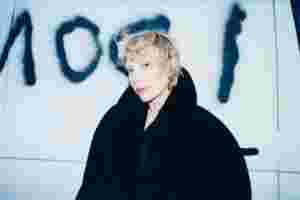
Interview Lykke Li: Raw Power
Almost 20 years on from the release of her debut EP, Swedish pop auteur Lykke Li is as bold as ever. With the the release of her sixth full-length ‘The Afterparty’, she’s fuelled by an intense love of songwriting, a carnal desire for creativity, and a dose of insomnia for good measure.
Lykke Li hasn’t slept in two days. Currently criss-crossing Europe, she’s in the middle of promoting ‘The Afterparty’, her sixth and possibly final studio album, and it’s messing with her Circadian rhythms. “It’s really strange - I’m a better artist in my bedroom than on the road. On all my tours, I have insomnia and, like, go mentally ill,” she says. Perhaps aware that this sounds a bit heavy, especially at the very start of an interview, Lykke reaches for a positive. “But all the most intelligent people have insomnia, right? So I’ll take that as a compliment.”
She has just jumped in a cab after taking the Eurostar from Paris to London - “I love a train!” she enthuses - and our conversation is interrupted by occasional chuntering from the driver. But even with the Zoom camera off, which is fair enough after two sleepless nights, there’s a candid quality to the Swedish pop alchemist born Li Lykke Timotej Zachrisson. “To be an artist at this age,” she muses, alluding to her recent 40th birthday, “and with two kids is, like, pure insanity. I just saw this clip on Instagram that said: ‘If you’re 40 and still making art, you missed the exit road to being normal.’ And I was like, ‘Yeah, it’s insane!’”
Creativity runs in Lykke’s blood - she’s the daughter of a photographer and a punk-reggae musician - and her urge to write songs is primal. “I’ve always had a very deep need to put my finger on what I’m feeling,” she says. “I feel like you shouldn’t really write unless you absolutely have to because it’s such an intense process.” Back in 2014, when she was promoting her beautiful, heartbreak-fuelled third album ‘I Never Learn’, Lykke told DIY that her overarching aim was “to try to write the modern version of the perfect classic song”.
Even at this relatively early juncture, she’d achieved this goal several times over: with the brilliant off-kilter pop of her debut single, 2007’s ‘Little Bit’; the primordial swirl of 2011’s ‘I Follow Rivers’, one of the defining songs of the decade; and the majestic melancholy of 2014’s ‘No Rest for the Wicked.’ Today, Lykke says she’s still “insanely obsessive” about the craft of songwriting. “I’m pretty trad, I guess,” she says. “I write on the piano or guitar, and I really try to get the song… like, it’s not about perfection, but [about making the song] as it’s supposed to be - you know, its ultimate form.”
She wrote 50 songs for ‘The Afterparty’, a maximalist affair featuring a 17-piece string section and what Lykke describes as “apocalyptic bongos”, but whittled down the tracklist to nine with a lean runtime of 25 minutes. The result is sharp, symphonic indie-pop with an espresso-like intensity. “I’m an old hag who likes [a] side A and a side B. And I gravitate towards very precise work,” Lykke says. “I really hate this new thing of really long albums that make no sense. I need the edited version, I need to understand it.” For Lykke, “every word” and every musical choice should cut cleanly and definitively “like a knife”.
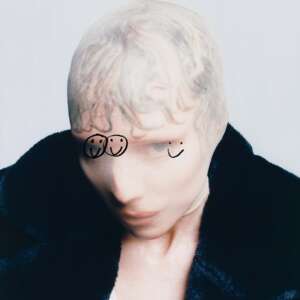
“As I writer, I get really turned on by the stickier emotions. I’m drawn to unhinged, off-the-rail situations and personalities.”
The phrase “like a knife” also forms part of the album’s most indelible chorus - “life is like a knife in the heart” - from the stunning penultimate track ‘Knife in the Heart’. Lykke quips that this is how she’s feeling today after “two nights of complete insomnia”, then adds more seriously: “But I also think I found a quite simple way to describe what this life is.” Largely written in Los Angeles and recorded at ABBA’s old studio in Stockholm, ‘The Afterparty’ revels in the chaos and confusion before an impending apocalypse - hence those doom-laden bongos.
“The title just came to me as I was sitting in the car. There’s something about the brightness of LA that is almost too much,” Lykke recalls. “Like, the saturation is so high, but then there’s so much decay and suffering on the street. I just turned off the radio and everything felt clear to me. I was like, ‘Wow, we’re really at the afterparty where maybe there’s one or two hours of fun left to be had before the world is going to collapse completely.” Anyone with a vague awareness of global politics and the climate crisis will relate to this sentiment, but ‘The Afterparty’ is more prickly than preachy. “See her with her long hair, television pretty / I know you got the wrong girl when you left without me,” she sings on ‘Sick of Love’, a vengeful electro bop about trying to seduce someone who’s passed you over.
“I’m just tired of this whole phase we’re in right now where everyone’s all about self-improvement and plastic surgery and pretending that life is so amazing on Instagram,” Lykke says. “As a writer, I get really turned on by the stickier emotions. I’m drawn to unhinged, off-the-rail situations and personalities.” This fascination with the less salubrious aspects of human nature has always been a Lykke hallmark. On her stellar second album, 2011’s ‘Wounded Rhymes’, she sang about the dark side of desire (‘I Follow Rivers’), the intersection of sex and power (‘Get Some’) and the strange allure of sorrow (‘Sadness Is a Blessing’). Her formidable fourth LP, 2018’s ‘So Sad So Sexy’, more than lived up to its title with songs like ‘Sex Money Feelings Die’, a paean to recreational drug use and casual sex.
Lykke’s artistic vision has always felt singular, and at this point, her creative process is well-honed. Generally, she writes and demos every song herself, then remodels it with her chosen co-producer. On ‘The Afterparty’, she reunites with her longtime collaborators Björn Yttling (of indie trio Peter Bjorn and John) and Rick Novels, who contributed extensively to her second and third albums. Lykke says she has “vocal phobia” because she hates singing into a microphone in the recording studio, so she usually leaves her demo vocal on the finished record because it sounds the most “alive”. However, as she nears 20 years in the music industry, Lykke believes her wisdom has been hard-earned. “Well, I’m realising now that 20 years ago, I was exactly what the industry thrives on: a young girl without a clue,” she says, “But that’s the world, right? We’re living in a patriarchy, so it’s always tough.”
When did she feel she finally had a handle on how things work? “I mean, you really get it when you’re on your way down. That’s when you learn,” Lykke says wryly, before adding a sanguine caveat: “I mean, if you’re gonna have a long career, there’s going to be many ups and downs.” What’s kept her going, “as much I hate this industry”, is the “hardcore vocation” of being an artist. “It’s a constant challenge with so much physicality and philosophy involved,” she says. “And I don’t know what else could give me the same highs.”


“I hope that maybe [my] legacy will be rawness, honesty and beauty.”
Even so, Lykke seems to be at a career crossroads. When she announced ‘The Afterparty’ in January, she described it as “maybe my final” album, a bombshell that leaves a glimmer of hope for fans. Today, she confirms that it could become her last LP “as this incarnation” of Lykke Li, but also says more vaguely: “I’m realising that I cannot stop making music. I just find the whole thing of making a piece of art, then seeing it as a square on a [streaming] platform…”
Lykke stops herself from completing the thought, then adds tangentially: “You know, I also want to do some museum work.” She isn’t without loftier ambitions, either: “I’d like to do more film work, I’d like to win an Oscar.” When she was asked to contribute an original song to 2009’s Twilight: New Moon soundtrack, she was given a specific scene to write for, and crafted a suitably portentous piano ballad called ‘Possibility’. “I loved that process so that’s probably what I want to do more of in the future,” she says today.
So, if this is the last Lykke Li album as we know it, at least for a while, what does she want her legacy to be? “I feel like only now do I know a thing or two about art. Like, the beginning [of my career] is a bit embarrassing because it’s so naive and juvenile,” she replies. In fairness, she did name her 2009 debut album ‘Youth Novels’ and release a lovely song called ‘Youth Knows No Pain’ two years later, so a certain unworldly innocence was baked in. “But I really hope that I can keep fine-tuning my writing,” Lykke continues, “and I hope that maybe the legacy will be rawness, honesty and beauty, but the right type of beauty.” She pauses, then allows herself a gentle pat on the back. “At least I tried to write good songs,” she says. “I mean, I’m proud of ‘I Follow Rivers’, that’s definitely a good one.”
‘The Afterparty’ is out now via Neon Gold.
Records, etc at


As featured in the May 2026 issue of DIY, out now.

More like this

Wolf Alice are the cover stars of DIY’s May 2026 issue!
Our festival special also features chats with Kasabian, Lykke Li, Genesis Owusu, Marmozets and loads more.
13th May 2026

Lykke Li - The Afterparty
4 Stars
Just like a big night out, or indeed its afters, the record is dizzying but flies by too fast and leaves you wanting just a tiny bit more to savour.
8th May 2026
Lykke Li schedules headline show at London’s KOKO
The Swedish star will return to the venue this June, in support of her new album ‘The Afterparty’.
21st April 2026
Lykke Li - EYEYE
3-5 Stars
It finds its voice through an ever more personal lens, one that dials down the familiar ignitable fare in favour of intricate ambient spread.
20th May 2022

Featuring Yard Act, Death Cab For Cutie, Graham Coxon, Maisie Peters and more.