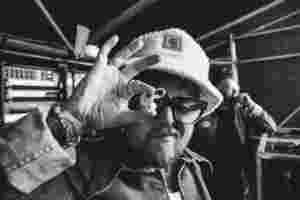
Advertorial feature “Hearing isn’t a finite resource, it’s a privilege” - Coach Party, The Lottery Winners & ARXX talk hearing health during Tinnitus Week 2026
We’ve teamed up with ACS Custom - global specialists in hearing protection and in-ear monitors - to highlight just how important it is to look after your hearing.
If there’s one thing that’s incredibly important whether you make music, or just love to listen to it, it’s your hearing. An element of our wider health that often gets ignored or put on the back burner, looking after our ears is integral to being able to enjoy music well into our lives, and that’s something that ACS Custom are passionate about encouraging people to do.
One of the most preventable occupational health risks, musicians are up to 4x more likely to develop music-related hearing loss, while 1 in 3 musicians will experience symptoms of tinnitus; what’s more shocking is that - due to regular exposure above 85 dB - gig-goers, festival fans and hobby musicians are just as likely to be at risk.
As part of their mission to help protect the hearing of artists and fans alike, ACS Custom is a UK-based company with over 30 years of experience designing and manufacturing custom-fit hearing protection and in-ear monitoring solutions. Founded on clinical audiology principles and developed alongside the music industry, the company have become the go-to partner for musicians, engineers, DJs, crew, and serious music fans who want to protect their hearing without compromising sound quality.
As such, they attract a variety of musician ambassadors who now used their products and have never looked back, including Coach Party, The Lottery Winners and ARXX. To mark Tinnitus Week 2026 - which is taking place this week, from 2nd to 9th February - we spoke to members of each act to learn just why protecting their hearing health is so important, and to help raise awareness further.
Guy Page, Coach Party
This week is Tinnitus Week 2026; hearing health is not necessarily considered a glam talking subject, but have you had any specific experiences that made you realise you needed to start looking after your hearing a little more?
Agreed that it’s not the most riveting conversation, but thankfully boring topics are kind of my thing, and I’m glad it’s at least more widely spoken about and considered than it has been in the past.
I’ve been aware of and concerned about looking after my ears for a long time, but I always found it really difficult to manage before moving to in-ear monitoring. I want to have a good time on stage, and for me a huge part of that enjoyment comes from hearing yourself and the rest of the band in a way which feels clear, natural and exciting, and the disconnect I’ve always felt when playing with earplugs was a constant challenge. I’d often find myself taking them out mid-gig, or kind of putting them 1/2 in to try and preserve some natural sound, and would of course regret those decisions by the time I got home and had ringing ears for the rest of the night.
As someone who also produces and mixes music, I’d be thinking “cool, that’s another gig closer to ruining my passion & career”, and after a few repetitions of this realisation I started to be more strict with myself as far as hearing protection went. A lot of the gigs I was doing were very DIY, and I started to experiment with taking a direct feed from whatever PA was being used into some closed-back headphones, and quickly came to the conclusion that even if the mix was bad, it was clearly less fatiguing on the ears, and in many ways sounded better to me. At the time, people at my level just weren’t using IEM’s, and it was a bit of a weird thing to do, but I’m glad I did it when I did.
What sort of challenges are presented to you as a musician in terms of your hearing health, especially as venues change size and audiences get bigger?
I think one of the challenges which is less understood amongst musicians is the concept that you have a kind of ‘allowance’ of exposure to noise at high levels. As in, the louder the environment, the less time you can be subjected to it before it does some permanent damage. If you’re on tour, for example, you don’t really have a lot of control over your schedule, and a lot of what you’re going to be doing will involve dangerously loud situations. Not just during your soundcheck and performance, but how about if your dressing room is right next to the stage with no soundproofing, the house PA is blaring out tunes whilst you’re at the merch stand, and then you spend every van journey to the next venue with headphones on listening to music at a level which is competing with the noise of the engine & traffic? It’s so easy to overdo it without even realising. If you’re concerned about your hearing, you need to be aware of your exposure to noise and take control where you can. It’s a bit more manageable in a studio situation to take an ear-break, but when you’re on the road it’s just go-go-go.
Again, it’s probably not something that fans or audiences really appreciate, but what sort of difference do in-ear monitors make to you as a band?
It’s been an absolute game-changer. Without a doubt, the most significant technical adjustment we’ve ever made to our live show; way more of an impact than any other choice of equipment / instrument. We had this one (really big) gig, before we had moved over to in-ear’s, which couldn’t accommodate traditional monitor wedges on stage and they insisted that we use IEM’s. We were apprehensive, but those were their rules, so we hired some wireless equipment and bought some entry-level earphones which we tested in the rehearsal room, and instantly knew that this was the way forward for us. The ability to really personalise our mixes means we’re each hearing exactly what we need to perform at our best, whilst pretty much eliminating feedback issues and hugely reducing ear fatigue. We’re just so much happier on stage, and hopefully that makes for a better show.
And how has it been using ACS’ products? How do you think they’ve helped to change how you perform?
I’d personally say that after moving to IEM’s in general, moving from generic-fitting models over to the molded ACS’ has got to be the most important change we’ve made. They’re a fantastic company, who in our experience make an effort to get to know their customers and ensure that they’re 100% happy. The difference in comfort and quality of sound compared to what we were using before is undeniable; I forget that I’m wearing them and find myself fully in the music. With their IEM’s I get a very immediate and natural feel for how my instrument is responding, so for example I’m not over-hitting the drums, or overshooting vocals like I found myself doing with lesser IEM’s. Honestly they’re amongst my most precious possessions musically.
Is there any advice you’d give to young artists or audiences wondering about these kinds of issues?
Keep in mind that if you’re lucky enough to be able to hear anything at all, then it’s not too late to protect your hearing, but do it now. If you’re a musician who has hearing damage already, don’t be ashamed of it or think that you’re too far gone to bother changing. Some of the most incredible musicians I know suffer from the most severe tinnitus and hearing damage, but those same people are as musically-active as anyone and take their hearing-health very seriously. It’s all about managing, adjusting and preserving in the best ways that you can.
Thom Rylance, The Lottery Winners
Have you had any experiences that made you realise you needed to take it more seriously?
Yeah, definitely. When you’re younger you just crack on, loud gigs, standing next to drum kits, amps screaming, and you don’t really think twice. I started noticing ringing after shows, especially after smaller venues where the sound can be a bit more chaotic. That was the moment it hit me that this isn’t something you can fix once it’s gone. Your ears are kind of your livelihood, so you’ve got to treat them with a bit of respect.
What challenges do you face as a musician when it comes to hearing health, especially as venues get bigger and audiences grow?
The bigger the shows, the louder everything gets, not just the band but the crowd too. Stadiums and big rooms are amazing, but the sound pressure can be intense. You’ve got drums, guitars, backing tracks, crowd noise, and if you’re not careful it can all turn into a wall of sound. The challenge is being able to hear what you actually need without it becoming overwhelming or damaging over time.
Fans might not always appreciate it, but what difference do in-ear monitors make to you as a band?
They make a massive difference. In-ears give you clarity and control. You can hear exactly what you need to hear at a sensible level, rather than fighting the stage sound. It means you play better, sing better, and you’re not wrecking your ears night after night. Once you get used to them, you don’t really want to go back.
How has it been using ACS products, and how do you think they’ve changed how you perform?
They’ve been brilliant. The big thing for me is trust. I know the protection is doing its job without ruining the sound or the feel of the gig. Everything still feels exciting and live, just safer. It’s taken a lot of stress out of performing, because I can hear everything with crystal clarity and because I’m not worrying about the long-term impact every time I step on stage.
Do you have any advice for young artists, or even audiences, thinking about hearing health?
Don’t wait until there’s a problem. That would be my main advice. Protecting your hearing doesn’t make you boring or unrock and roll, it means you get to keep doing the thing you love for longer. Whether you’re on stage or in the crowd, a bit of protection now is a lot better than permanent ringing later. Your future self will thank you.
ARXX
Have you had any specific experiences that made you realise you needed to start looking after your hearing a little more?
Hanni: Absolutely! I started noticing I was experiencing hearing loss around 5 years ago. I noticed it when I was out at pubs with friends and I couldn’t make out what people were saying anymore. You massively take these things for granted and it might not be a glamorous thing to protect yourself, but you’re also protecting your ability to do the job you love.
What sort of challenges are presented to you as a musician in terms of your hearing health, especially as venues change size and audiences get bigger?
Clara: When we started playing bigger support tours and we hadn’t moved onto IEMS, we felt like we needed the monitors so loud to hear ourselves over the crowds. It kept getting louder and louder each night, and it feels scary to be on a big stage and not be able to hear yourself clearly. We wish someone had told us the difference IEMS would make sooner!
Again, it’s probably not something that fans or audiences really appreciate, but what sort of difference do in-ear monitors make to you as a band?
Hanni: For us performing is all about having fun and connecting with people. The last thing you want is to feel pulled out of that moment because you’re panicking that you can’t hear yourself! Switching to IEMS gives you that consistency and piece of mind, and you can focus on what’s important.
And how has it been using ACS’ products? How do you think they’ve helped to change how you perform?
Hanni: When we play we want to give all our energy to our fans, which means we end up a sweaty mess! We got through rolls of tape every tour. With the ACS moulded IEMS it’s wild what they can endure and stay in place. The sound quality’s not bad either.
Is there any advice you’d give to young artists or, equally, audiences wondering about these kinds of issues?
Hanni: Hearing isn’t a finite resource, it’s a privilege. Wear earplugs!
ACS Custom exists to make loud live music safer and more enjoyable for everyone. To support the magazine’s community, this feature will launch an exclusive discount code, giving readers access to professional-grade hearing protection and in ear monitoring solutions trusted by the music industry.
Use code DIY15 for discount on all Custom Fit Products (Pro Earplugs & In Ear Monitors) over at acscustom.com/uk now.

Featuring Yard Act, Death Cab For Cutie, Graham Coxon, Maisie Peters and more.