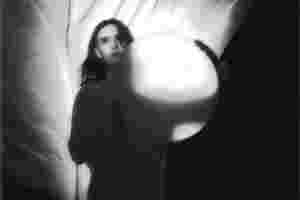
Neu Get To Know… Bug Teeth
Immersive, emotion-excavating soundscapes of grief and growth.
Hello and welcome back to DIY’s introducing feature, Get To Know… which aims to get you a little bit closer to the buzziest acts that have been catching our eye as of late, and working out what makes them tick.
This time, we’re catching up with Leeds stalwarts Bug Teeth, who this month have presented their long-awaited debut album ‘Micrographia’: a record that finds itself suspended in the hazy mid-air between ’90s dream-pop, psychedelia, and ambient electronica, using this liminal locale as a means to navigate life’s most fundamental truths. To mark its release, we sat down with frontperson PJ Johnson to learn more about their formative experiences and unlikely literary influences.
What’s your earliest musical memory?
Most half terms, my sibling and I were packed in the car to visit my mum’s best friend in Manchester. It was a long drive for a child from Essex - about 4 hours - punctuated with various albums my parents wanted to listen to. I’d often pretend to be asleep so that my mum would turn the music off and put on an inappropriate audiobook that contained swearing. But despite that, the music we listened to on drives stuck with me. Simon & Garfunkel, Kraftwerk, and Björk were real standouts, and I knew those CDs inside-out.
Growing up, what was your musical education like? Were your tastes shaped by your family or friends, or a local venue/record shop/band? Give us an insight into those formative days.
Most of my music taste was pulled from those aforementioned long drives, with various influences from friends stuck in. I went through a teenage stage of wanting to listen to ‘cool music’ exclusively, which is how I was introduced to Brian Eno and Cocteau Twins. My parents had wildly varied music tastes - my mum loving hip-hop and rap, my dad preferring folk and krautrock. I like to think I found the best bits of everything. Chelmsford, at the time, had next to no musical culture, meaning I was forced to take the train to London multiple times a week for gigs. I made lots of friends this way, and consumed far too many bottles of wine in parks.
‘Micrographia’ is named after a 17th century scientific paper, and also pulls inspiration from, among other things, surrealist and dystopic literature. Can you tell us a bit more about these non-musical inspirations? How do you think they inform or affect your sonic output?
Most of my touchpoints come from literature. I’m a writer and a hungry reader, looking for anything transgressive to add to my collection. During my undergrad degree, I took a module on Literature and Science in the 17th century, which is where I was introduced to Micrographia. I became obsessed with this text, and wrote a lot about eschatology in this time period, which is where our ‘Lucky Me, Lucky Mud’ EP was born. Ultimately, everything I read informs my music, lyrically or thematically - and I just tend to read a lot.
“I’d like the conversation around grieving publically to be opened up — we don’t have a culture where this is respected enough.”
Who would be your dream collaborator (and why)?
Every member of the band would have a different answer to this question, but my dream collaborator would be Trish Keenan. Broadcast is a band that never cease to inspire me, and Trish’s life and death were monumental to my work as a musician. Collaboration isn’t on the cards, but I like to think we’d have good chats.
At the core of ‘Micrographia’ is navigating the seismic, significant loss of your mother. How have you found the experience of making the album has helped express or process your grief? Are there any particular lessons or reflections the record has given you?
Writing about grief through music was never my intention, and I actually resisted it a lot in the beginning. When we wrote ‘Landscaping’ in 2022, it was the first time that my grief had broken through, and it was incredibly cathartic for me. I felt like I was experiencing it in a new way. As the whole album started to form itself around that loss, I knew it would be a really difficult process. Writing and recording took a lot from me, especially having to be around other people during that time. I found a new profound gratefulness for my band members - it is extremely special that they allowed me this opportunity to grieve, and let the project take this form. It was also special to work with [producer] Joel Patchett on this - I felt really listened to by him, and he helped make space for my mum in the songs. I think I need a rest from writing about grief though!
If people could take away one thing from your music, what would it be?
I definitely appreciate that people can listen to these lyrics about my grief and understand it, or understand more about loss. I’d like the conversation around grieving publically to be opened up - we don’t have a culture where this is respected enough. But also - good tunes!
Finally, DIY are coming round for dinner - what are you making?
I make a mean dhal. Recently, I’ve been chucking in chilli crisp to mac and cheese too. I hope DIY would appreciate my cat trying to beg for scraps. [We absolutely would - Ed].
‘Micrographia’ is out now via State51.
Records, etc at

More like this
The Neu Bulletin (Opus Kink, Chiedu Oraka, The New Eves and more!)
DIY’s essential guide to the best new music.
13th October 2025
The Neu Bulletin (Chiedu Oraka, CATTY, Silver Gore and more!)
DIY’s essential guide to the best new music.
29th August 2025
The Neu Bulletin (Cliffords, Keo, mary in the junkyard and more!)
DIY’s essential guide to the best new music.
30th May 2025
The Neu Bulletin (Wasia Project, Cassyette, Welly and more!)
DIY’s essential guide to the best new music.
22nd March 2024

Featuring Yard Act, Death Cab For Cutie, Graham Coxon, Maisie Peters and more.