
Interview Iceage: Out Of The Cold
Having grown from obtuse Danish punks into a consistently revered artistic force over almost two decades, Iceage have returned with arguably their strongest statement yet. On the eve of new album ‘For Love Of Grace & The Hereafter’, frontman Elias Rønnenfelt reflects back across the years.
“An Iceage record is sacred to us,” explains Elias Rønnenfelt. “It’s not something you do for the sake of doing it.” On the eve of the release of their sixth - and arguably best - album to date, ‘For Love Of Grace & The Hereafter’, the singer is reflecting on their nearly twenty-year career. Alongside Dan Kjær Nielsen, Jakob Tvilling Pless, Johan S. Weith and Casper Morilla Fernandez, Iceage have graduated from infamous industrial punks to sophisticated indie rockers, over a catalogue that has rarely dipped in four star quality.
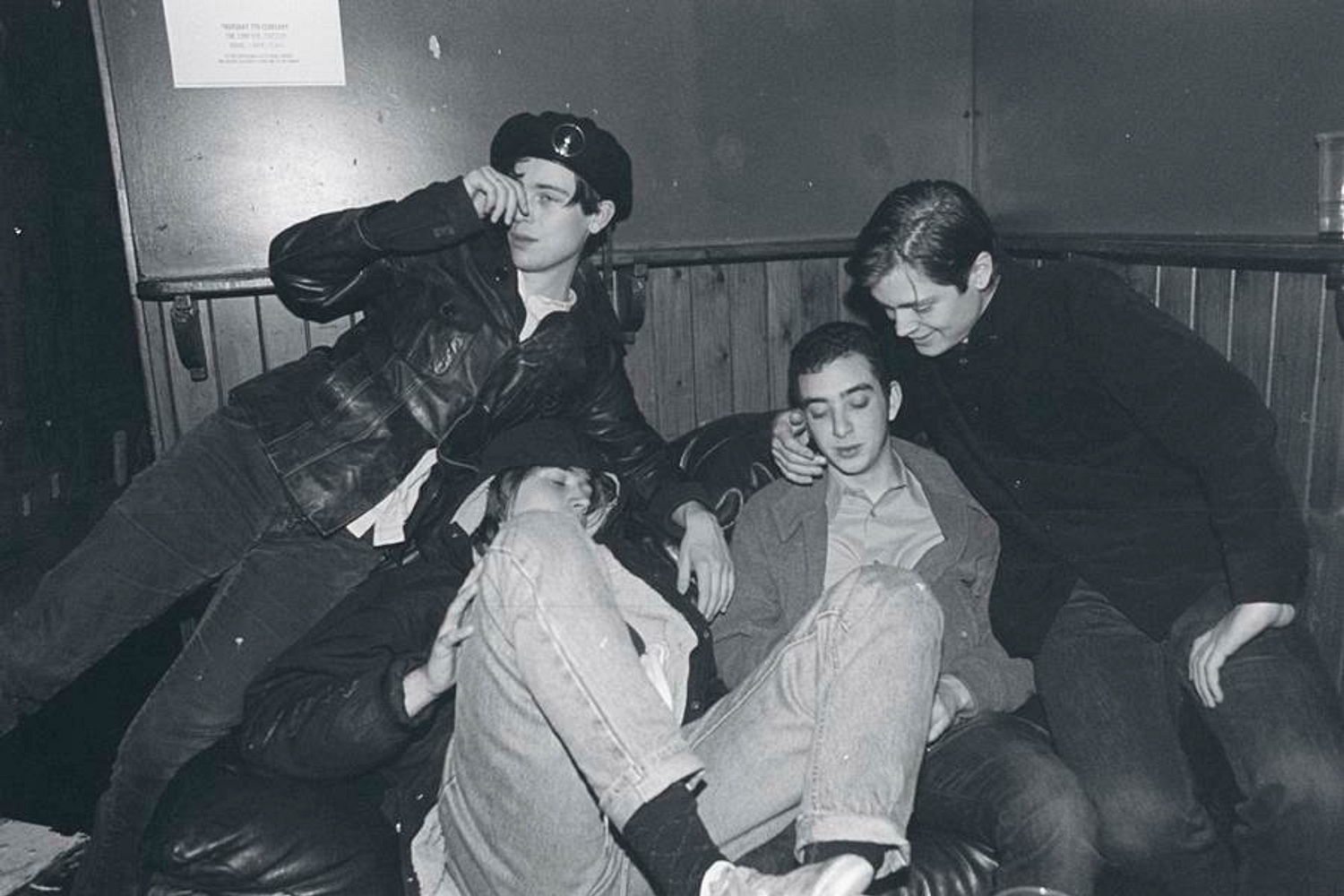
Having been together since they were kids, does he feel that meeting the other members of the band was something that was predestined? “It can feel that way. I met those boys when I was 11 and I can’t imagine my life any other way,” he says. “We were misfit kids around the same time in Copenhagen. Our drummer Dan was one year ahead of me at my primary school, we didn’t know each other, but we would eye each other in the halls and I could tell we were cut from the same cloth. When we finally got to know each other, it was like we’d gone from being outsiders to being a unit.” He says that the adolescent boys soon bonded over music and art. “It became us against the world, against Copenhagen or Denmark.”
Admittedly, they began haphazardly. “We were incapable of playing in a straightforward way,” he says. “People would play in different tempos, we had this extremely disjointed way of playing together. It morphed into something more harmonic along the way.” But soon, the group harnessed their musicality enough to create their electric, post-punk debut, 2011’s ‘New Brigade’. In a year of indie futurism, its raw sound piqued the interest and rattled the cages of the establishment. The then 17-year-old Elias and his band mates were in the eye of the indie-storm. Released on the achingly cool Matador records, ‘New Brigade’ was voted Vice magazine’s Album Of The Month, while Elias made NME’s Cool List at Number 23 (one notch above Girls’ Christopher Owens and below Bombay Bicycle Club’s Jack Steadman).
Their new level of international fame was a shock to their collective systems. “We had dreams of changing Copenhagen but we had no aspirations to tour the US or Asia. We didn’t plan on breaking through,” he says. Elias’ own outlook on the way the group were going came from a sense of nihilism. “I had already dropped out of high school, and I had no vision for the future. And the other guys were sort of in a similar place,” he says. “We were in the perfect place to just leave everything behind and just live on the road. Because why the fuck not?” At the same time Elias notes that while it was “amazing” to see fans screaming along to every word from their songs it was also deeply “bewildering.”
“We couldn’t articulate it back then, but we were extremely protective of ourselves to not believe the hype.”
— Elias Rønnenfelt
Despite being relatively fresh-faced, Iceage had a gut instinct to not get lured into the promises made by the music industry. “You’re in such a vulnerable state when you’re that young. And here’s an industry of grown-ups who make fake promises and want you to sign deals with them. It’s dangerous,” he reflects. “We couldn’t articulate it back then, but we were extremely protective of ourselves to not believe the hype. We kept our guard up.”
Iceage reacted to their newfound indie fame by coming together and shutting out the world. “We have a ridiculous capacity to be around each other, and we have always been good about looking out for each other,” he says. “We’re not the easiest people but there’s always been a tenderness between us.”
“Not the easiest people” was thought to be an understatement. By the early 2010s Elias had gained a reputation for being difficult. A Spin magazine interview from 2014 notes his “stony silence” while a Fader interview from the same year is savagely titled: “a cheerless weekend with rock’s most difficult frontman”.
More controversial than this, however, were the punk collages Elias had made for a fanzine, Dogmeat, that drew widespread ire when they reappeared online. Featuring members of the Ku Klux Klan stabbing people, skinheads, and switchblades pointing towards Islamic terrorist figures, the images (now wiped from the internet) led to accusations that the group were far-right European reactionaries. “At first we were like: ‘we’re not going to address it, because it’s preposterous’.” At the time, Elias explained “the drawings were scenes of Western views on racism, but a lot of people who saw them pushed the wrong button and said I’m pro-racism.” The claims followed Iceage around for the majority of their career until they were finally laid to bed in 2021 when Elias told Pitchfork: “We are definitely not right wing, and we don’t have any sympathy or leanings to that side”.
But recently, with rumours that Elias is dating actress Jenna Ortega, those accusations have come back to haunt him. Ortega’s parasocial fans have taken to filling up Iceage’s social media with non-sequitur comments like “Leave Jenna Alone”. So despite Elias’ reflection that “it was dumb on our part to not take account of some of that stuff”, it doesn’t look like the controversy is ready to die down just yet.


“There shouldn’t be a moment on [the album] that didn’t earn its place. We wanted to keep it raw.”
— Elias Rønnenfelt
Today, Elias is far from the taciturn presence who gave brusque interviews when Iceage broke through. Dressed in a sheepskin leather jacket with a just-washed fringe almost shielding his eyes, he takes long, long pauses between questions, and answers thoughtfully. There’s a romantic otherness to him, which speaks to his restless creative spirit. Since Iceage’s 2021 album ‘Seek Shelter’, he’s had a flurry of solo activity, including 2024’s ‘Heavy Glory’ and last year’s ‘Speak Daggers’. “In recent years I’ve been in a state of hyper productivity,” he explains. “It’s almost involuntary: the ideas bicker at you if you try and leave them alone. They won’t let you go to bed if you don’t do something about them.”
The relatively sedate nature of his solo material necessitated a need to get back together with Iceage. “I had some stripped-back balladry I needed to get out of my system, in order to realise there’s this pretty ferocious rock and roll band over there.”
Despite the five-year gap between albums, Iceage “never stopped” playing together. But when they decided to hunker down and make a new album, Elias had some rules in order to re-capture a certain brevity. “We didn’t want any stagnation,” he says. “No songs could be longer than four minutes. There shouldn’t be a moment on there that didn’t earn its place,” he explains. “We wanted to keep it raw.”
The result is ‘For Love of Grace & The Hereafter’, a record which mines the same fizzing, grot rock-meets-baroque pop (‘Groque pop’?) style they began to mine on 2014’s ‘Plowing Into The Field Of Love’. It’s a collection of songs that feel fresh as spring while maintaining a raw, live vibe. The maths-rock-pop jangle of early Pavement is heard meeting the dirty, country-rock of Primal Scream’s ‘Give Out But Don’t Give Up’. A lack of polish gives it the honest alchemy of something that is united by the chemistry of five best friends who’ve known each other for more than half their lives. Inspired in part by Shakespeare and Emily Brontë, the vague theme which runs through it is “the hardship, the obstacles and the punches that life brings along the way”.
It’s something that parallels the current political climate in Elias’ home country. “Denmark has been just getting worse for a long time,” he says. “What used to be centre left resembles the centre right. There’s an extreme push for the right and things are spinning out of control. From a government standpoint it’s been a fucking disgrace, in regards to refugee policy, what we did to Syrian refugees” [the Danish Government revoked temporary residency permits for them, among other measures]. Iceage, who have played shows in support of refugees and arranged the Copenhagen for a Free Palestine gig, says that “action feels good when the world brings travesty and it makes you feel so powerless.” In these helpless, dark times, you can’t help but root for the brotherhood of Iceage.
Cop(enhagen) This!
Ever since Hayley Williams appeared on Amy Poehler’s Good Hang podcast and mentioned the great scene happening in Copenhagen, music fans’ ears have pricked up around mentions of the European city. When asked, Elias says: “There is a bunch of cool shit coming out of Copenhagen. Everybody is very supportive of each other – it’s sweet people, doing cool things.” He cites Erika de Casier (who appears on ‘Speak Daggers’), haloplus+ and Smerz as acts he currently rates.
‘For Love Of Grace & The Hereafter’ is out now via Mexican Summer.
Records, etc at


Iceage - For Love of Grace and the Hereafter

Iceage - Youre Nothing

Iceage - Beyondless
As featured in the June 2026 issue of DIY, out now.

More like this

Iceage - For Love Of Grace & The Hereafter
4 Stars
Intent, purpose, and a play to make things bigger.
29th May 2026
Iceage confirm new album ‘For Love of Grace & the Hereafter’
They’ve marked the occasion by sharing its strutting opener ‘Ember’.
7th April 2026

Elias Rønnenfelt - Heavy Glory
2-5 Stars
A jumbled disappointment.
23rd October 2024
Upbringing: Iceage
To celebrate the release of their new compilation album, drummer Dan Kjær Nielsen reflects on his musical journey.
23rd September 2022

Featuring Yard Act, Death Cab For Cutie, Graham Coxon, Maisie Peters and more.