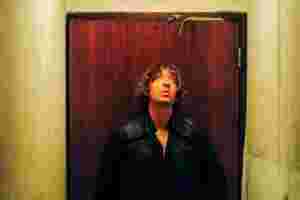
Daniel Avery: Rock DJ
After embedding himself in nightclub culture over the past 12 years, the man once crowned the Prince of Techno has made a rock album featuring The Kills’ Alison Mosshart, an Oasis bassist, and a certain pseudonymous singer with an instantly recognisable voice. Ahead of his sixth studio album ‘Tremor’, he opens up about making the natural transition from DJ to rock star.

Techno is Boring. That’s the title of Daniel Avery’s book, published last year with an eye-popping selection of definitely not boring nightclub photography. In it, Avery tells tales of his upbringing on the South coast of Britain, of time spent in high street clubs with sticky floors that wouldn’t let you in if you were wearing jeans. He says he never felt at home in such places.
Despite having seen The Prodigy aged 11 and spending hours listening to Björk, Avery never truly felt curious about club music until he watched an episode of the Channel 4 reality TV series ‘Faking It’, in which a posh, 22-year-old cellist tried to make it as a DJ. Aired in 2001 when Avery was a teenager, the episode’s 45 minutes play out like a film, beginning with classical musician Sian in a knitted jumper and glasses as she temporarily moves in with her tutor for the month, hard house DJ Anne Savage. Along with friend and fellow DJ Lottie, Savage takes Sian to clubs around Europe and, gradually, the cellist falls in love with raving.
“The club culture parts were intriguing,” writes Avery, “but the meat of the story was about not wasting your youth, the joy of going out until sunrise, making friends for life and not getting old too quickly.”
Avery definitely did not waste his youth. Having played bass guitar in rock and shoegaze bands as a teenager, he became a famous DJ in his twenties, a career launched by a residency at Fabric and the 2013 release of his monumental debut album ‘Drone Logic’. Five albums, countless tours and several magazine covers later, however, he’s making a mid-career left turn.
His seventh album ‘Tremor’ is a rock record on which Avery emerges from the shadows of isolationist techno into a new role as a bandleader, conductor and puppeteer. He brings together a raft of collaborators, such as the excellent Cecile Believe, who’s previously worked with SOPHIE, Oklou and Caroline Polachek, and sings on lead single ‘Rapture in Blue’. Guitar on the song comes from Andy Bell, a founding member of shoegaze legends Ride and Oasis’ current bassist. Elsewhere, The Kills’ Alison Mosshart sings on ‘Greasy off the Racing Line’; Walter Schreifels (of legendary hardcore bands Gorilla Biscuits, Rival Schools and Quicksand) features on ‘In Keeping (Soon We’ll Be Dust)’; and Art School Girlfriend, bdrmm, yeule, yunè pinku, and NewDad’s Julie Dawson are among the many others credited in the liner notes.
Sitting opposite Avery now in East London, it seems pertinent to ask if, as a rock kid who became a DJ and a DJ who’s now making rock, he’s ever felt like he was faking it? “No, but…” he begins. “I’m very aware that for over a decade I’ve been repeating that line: I don’t come from a techno background; I’m a rock kid. But I have now been a techno guy for well over 10 years. So ‘faking it’ might be too strong, but I’ve certainly never entirely felt like a techno head.” Two coffees arrive and Avery requests sugar. “A shorter answer is probably yes.” He extrapolates, evoking a black-t-shirted techno crowd sceptical about the presence of a luscious locked My Bloody Valentine fan in the DJ booth. In time, he learned not to give two shits.
“But then interestingly enough, making this album has been the most natural thing I’ve ever done, probably since the first album,” he says. “I’ve felt no expectations, no pressure. I just allowed everything I’ve ever learned to come out. This album has not felt like faking it.”

In the Channel 4 show, cellist Sian accompanies Savage to Bournemouth to see her DJ at a club night called Slinky. Avery grew up in Bournemouth, but Slinky was finished by the time he was old enough to go clubbing. Instead, he learned bass guitar and played covers of MBV and Kyuss songs with friends every week. He also regularly visited a record shop called Essential Music, and one day noticed a sign advertising for a warm-up DJ. Not long after his ‘Faking It’ awakening, he enquired and got the gig. Later, he found out that the guy working the till had hastily written the sign after seeing Avery walk in, on the strength of the records he’d bought on previous visits.
Much like Sian the cellist, the first time Avery played to a room of people, he had no idea how to DJ. But soon he moved to London, got a job handing out flyers at Fabric, and the next thing he knew he was DJing there. He started making his own music around 2010 under the name Stopmakingme, remixing Metronomy’s classic single ‘The Bay’ and releasing a few EPs before reverting to his own name for his edition of the feted FabricLive mix in 2012.
Around this time, Avery began working in a studio next to Andrew Weatherall, the music supremo behind classic albums by Primal Scream and Beth Orton, famed remixes of Happy Mondays and Saint Etienne, and DJ sets at clubs around the world. Having somehow convinced Weatherall to provide an exclusive track for his FabricLive mix, Avery set to work producing something he could imagine his new mentor playing at his London club night, A Love From Outer Space. He called the track ‘Drone Logic’ and gave it to Weatherall. The next day, the DJ called him to tell him it had taken the roof off.
“Noise flies high,” intones Kelly Lee Owens on ‘Drone Logic’ amid a haze of thudding chords and an irresistible groove. Avery named the track and his subsequent debut album after a period when mephedrone (aka MKAT) was ubiquitous in London nightclubs. The album was rightly hailed by critics and adored by fans and, for many listeners of a certain age, it became the first electronic album in iTunes libraries dominated by indie music.
“I’ve had that said to me plenty of times over the years,” Avery says. “It’s the most pleasing thing for me to hear. People say ‘I didn’t even like clubbing’ or ‘I didn’t go out before that’. In some ways, it was their ‘Faking It’ moment.”


When DJ Lottie takes Sian to a show in Greece, the cellist emerges from the club blinking into the morning sun. “It’s 7am,” she exclaims, chewing her words, visibly realising she is head over heels in love with the rave. Is she on pills? It remains unclear. But about a decade later an entire generation would also emerge from the club with the sound of ‘Drone Logic’ ringing in their ears and their lives changed forever. Why did it connect with people in such a way?
“If you listen back to it, even though it’s electronic, a lot of the tracks are structured like a song,” Avery says. “‘Drone Logic’ or ‘These Nights Never End’ or ‘Water Jump’ all have verse-chorus, verse-chorus, middle eight… But I wasn’t really setting out to make any kind of album. It was just an honest album that wasn’t overthought.”
Even amid the ‘Drone Logic’ acclaim, tastemakers including Resident Advisor still used terms like “rockist” in their reviews. And while he may have felt like an outsider, soon enough Avery was being booked to DJ at the biggest clubs in the world. He became one of techno’s most recognisable faces, and it took him five years to release another album.
“I was 27 when it all took off and I just was not prepared at all,” he says. “It’s a real runaway train. It can be easy to sort of get lost in that world.” Both the demands on and the inevitable overindulgences of touring DJs have been well documented. “I can’t think of any other job where the people paying you a lot of money are also trying to intoxicate you before you even start work. You’re sort of leading a party and, for all the obvious reasons, that can go wayward. I maintain that I’ve always done my job and I’ve never lost the plot entirely. But for me, the things that have been affected have been my mental health when I’ve not been on the road.”
Thankfully he eventually came around to this newfound life and recorded his second album, 2018’s ‘Song For Alpha’, plus four more in subsequent years. All these records are excellent, pulsating with the kind of distorted melody of which only Avery is capable, but they’re all, by most definitions, still electronic albums. While ‘Tremor’ still moves to kick drums and synthesisers, the album’s most notable moments are its soaring vocal choruses, its guitar riffs, and the sound of Avery playing bass. You can even hear his fingers on a fretboard in the opening seconds of ‘Haze’, an atomic bomb of a track that borders on heavy metal.
“I was buzzing with excitement when I finished it,” says Avery. “It felt new for me, but I recognised every component of it.” Providing an epic top line on ‘Haze’ is a voice that anyone in the know will immediately recognise as belonging to Ellie Rowsell from Wolf Alice, credited here, simply, as Ellie. Avery met her by chance on a street in Hackney where she told him how much she loved his track ‘On & On (Again)’, a collaboration with Confidence Man with a chorus worthy of the Chemical Brothers. Soon after, Avery invited her into the studio and once she’d belted out her contribution, he knew how his next album would sound. “It was such a pivotal moment and such an important piece of the puzzle,” he says.
From that point on, everything made sense. Avery went about recruiting a coterie of talent, from mixers David Wrench (Frank Ocean, FKA twigs) and Alan Moulder (Smashing Pumpkins, Nine Inch Nails) to Avery’s friends and fellow knob-twiddlers Manni Dee and James Greenwood (aka Ghost Culture). His role as bandleader may seem new, but Avery was a collaborator from the beginning: he worked with Dee, Greenwood and Kelly Lee Owens back in the ‘Drone Logic’ days, producing tracks like the shoegaze dirge ‘Keep Walking’, which ended up on Lee Owens’s debut album. With its reverberating vocals and cavernous chorus, ‘Keep Walking’ is the clearest precursor to ‘Tremor’ in Avery’s back catalogue, prefacing his work with the many singers on the new album.
Of all of them, Avery gushes most effusively about Mosshart, an obvious choice for the album’s biggest rock star. But he also mentions Singaporean iconoclast yeule, who sings on the industrial ‘Disturb Me’. “Yeule is a real, modern, almost futuristic rock star,” he says. “Everything about them is just aesthetically so perfect and has this real edge to it.” He adds that nobody on the record is a rock star in a problematic, diva kind of way. What about him?
“No,” he says, quickly. “I don’t feel like a rock star.” Then a pause. “Man… that’s thrown me a bit, but I think instinctively saying no is probably me being a bit self conscious. I’ve definitely flirted with the idea, but I think I’m just not internally built for that lifestyle.”
Beyond its musical brilliance, ‘Tremor’ is remarkable simply for how he managed to convince all these talents to get involved. Where once he might have felt like an outsider, he now seems an immensely popular man. What’s his secret? “There are lessons I’ve been taught by people,” he explains. Of everything he learned from Weatherall, he says the most important point was to never stop saying please or thank you. “There’s no need to be a dick.”
Back in that episode of ‘Faking It’, Sian plays a club night on a lineup with three other DJs, all of whom are jobbing professionals, while she has only been mixing for four weeks. She manages to convince everyone there she’s legit, with none of the four judges at the event suspecting her. As they deliver their verdicts, Anne and Lianne celebrate like they’ve won the World Cup. It’s genuinely moving. The next day, Sian tells the camera she’s planning to buy some decks and as she says goodbye to Anne and Lianne, all three of them are holding back tears.
The best thing about it is that Sian’s not faking it. Not really. She might be new to the practice, but her newfound love for the music is real. She’s earnest, dedicated and - quite simply - nice. It’s not too dissimilar to Avery. Whether he’s making techno, rock or whatever he dreams up next, he does it with genuine love. “I don’t think I’ve ever tried to be anything I’m not,” he says. “In so many ways, I still feel like a shy and retiring teenager. All of it feels like a dream.”
‘Tremor’ is out 31st October via Domino.
Read More

Kelela: Fear The Future
Having become renowned as one of music’s most cutting-edge but fluid visionaries for well over a decade, on her dystopia-fuelled third album ‘new avatar’, Kelela is both returning to her roots, and looking firmly ahead.

Yard Act: The Perfect Antidote
They’ve burned the Rover and built their own studio - three albums deep, Yard Act aren’t resting on their laurels. Now returning from LA with a new record in tow, James Smith and Ryan Needham talk to DIY about self-awareness, finding their sound, and just why we all need a little music right now.

Maisie Peters: Seasons Change
After a series of high profile support slots and live shows around the effervescent pop of last LP ‘The Good Witch’, Maisie Peters found herself ready for a gear change. With her third album ‘Florescence’, she’s dug a little deeper and found contentment in the more intimate moments of life.

Wolf Alice: Park Life
One of their generation’s greatest indie success stories, with latest album ‘The Clearing’ Wolf Alice have well and truly conquered the big leagues while always staying true to their roots. Returning to North London this summer for the fullest of full-circle moments, the band are rounding out their victory lap the only place possible - with a hometown turn at Finsbury Park playing their biggest ever headline show.