
Cover Feature CMAT: National Pleasure
If lime green was the colour of 2024, then 2025’s should surely be royal blue - the shade that, this year, has become synonymous with CMAT and her game-changing, triumphant third album ‘EURO-COUNTRY’. As the curtain falls on what’s been her long-awaited breakthrough to the big time, she reflects on her newfound pop stardom, the nuances of Irish identity, and a certain recent robbery…
Last month, news broke of the daylight Louvre jewellery heist - an event that shocked its nation and captured the imagination of people far beyond the scene of the crime. Just three days prior though, Newcastle’s Utilita Arena was the site of, arguably, an even greater theft. “CMAT was ROBBED,” proclaims Ciara Mary-Alice Thompson, the glint in her eye matched only by the flash of her tooth gems. “I’m sorry, I love Sam so much, but I was fucking robbed. I can’t even pretend that I don’t think that, because I do.”
The injustice in question is, of course, the 2025 Mercury Prize Album Of The Year - British and Irish alternative music’s most prestigious accolade, which this year was awarded to [a very deserving - Ed] Sam Fender for his third LP ‘People Watching’. “Sam’s album is amazing,” Ciara resumes, “but he even said it himself - ‘it’s not even [his] best record!’ I totally thought mine was the best record of all those that were nominated.” She’s laughing (as are we - it’s hard not to, in her company) but she is nevertheless, you sense, being deadly serious. “I guess what I was gutted about is that I don’t think I’ll ever win the Mercury Prize now, because - if I’m being brutally honest with myself - I really feel like I’m not going to make a better record than ‘EURO-COUNTRY’.”
Hang on, though - we’ve been here before. Last time DIY spoke to her, for the cover of our August 2023 issue, she made a similar assertion: that second outing ‘Crazymad, For Me’ - which was also shortlisted for the Mercury Prize - was “probably going to be the best album I ever make”. But as she sat in the audience for last year’s ceremony, she had a sudden wild urge not to win for that record. As she puts it: “I had a feeling that I could make something better.”
It’s refreshing to see an artist be so openly, unapologetically ambitious about their prospects, and so readily accepting of their success. Where others might play coy, Ciara knows she deserves her flowers. “I have to think that,” she nods, “because if you don’t think that, you are literally in the wrong job. If you don’t think that, you’re crazy to even attempt to do any of this.” And, Mercury or not, 2025 has been the year that proved CMAT is - and always has been - the right horse to back.
With ‘EURO-COUNTRY’ - her third album, released back in August - she’s finally made the leap proper from cult favourite to bona fide pop star. Doubtless, she was already on her way: both her 2022 debut ‘If My Wife New I’d Be Dead’ and ‘Crazymad, For Me’ are stellar collections of whipsmart, heartfelt songwriting. But this is, unequivocally, her best work yet, simultaneously a genre-coining paragon of her hybrid sound, a complex portrait of postmodern Ireland, and a benchmark of what modern pop can be. (Though if anyone can top it, it’s her).
There is, of course, a distinction between CMAT and the Ciara before us, sitting across this Hackney pub table with an untouched Lucky Saint. Ciara sometimes refers to CMAT in the third person, and isn’t drinking for fear of getting ill before her (re-scheduled) UK tour. But Ciara also arrives in a puff-sleeved, pink floral Barbour coat (“The Tories might be on to something with these, honestly”), sporting an Elvis badge that Harry Hill gave her (made by his wife, natch), gleefully discussing the interior decor of Alan Carr’s townhouse (she’s copped the same designer to revamp her new place). Whether on stage or not, she’s pretty fabulous. But that’s not to say she’s always been “the people’s mess”.
“It’s fucking mental,” she acknowledges, reflecting on her skyward trajectory from small town dreamer to self-styled “Dunboyne Diana”. “My life changed overnight when I signed my first record deal. I basically spent 10 years of my life telling everyone that I was going to be a famous pop star, and nobody believed in me because I was working in [Irish supermarket] SuperValu. All my family are nurses - we’re normal people - and I think everybody thought I was fucking mental. And then I signed the deal and thought ‘oh my God, finally, I’m vindicated’.”
Ciara was 25 when she was snapped up by AWAL. Since then, she continues, “it’s basically been four years of me just doing nothing but being CMAT: not having a fixed abode; not thinking about anything other than music or the job. I basically haven’t done anything [else] for the last four years.” For someone who, in her early twenties, was self-confessedly pretty lonely (“When I turned 22, I had no real friends to speak of”, she sings in the devastatingly beautiful ‘Lord, Let That Tesla Crash’), the past 12 months in particular must have been quite the trip; suddenly, adoring fans are making custom Barbie dolls in her image.
“Yeah, I do feel like the prettiest girl at the prom,” she smiles. “Everybody wants to be my friend, and this is really nice, but I can also kind of acknowledge that 95% of these people will stop acting like this in two years’ time when I’m not as popular, or busy, or I’m not on the telly as much anymore.” Neither arrogant nor self-deprecating, she’s simply honest, able to consider her own career with disarming pragmatism. “I’ve certainly lost people along the way… less so those types of Londony people, and more so people who I [used to] work with and be friends with who couldn’t deal with how famous and successful I became. And that’s also really understandable. I will never blame any of those people, because I don’t even think it’s a jealousy thing - it’s a self-preservation thing at that point. I think it’s literally just hard to be around.”


Was there, we wonder, a particular moment where she realised something had shifted? “This whole year has been the turning point for me,” Ciara says. “But honestly, I think the biggest zero to 100 of all time was probably Glastonbury.” It may have been early afternoon on Friday - likely the first set most people saw that weekend - but her performance on the Pyramid Stage was as memorable as any headline turn. Alongside her merry troupe of musicians - aka The Very Sexy CMAT Band - she gave us chaotic choreo, a Drag Race-worthy outfit reveal (complete with Jamie Oliver brooch), and possibly the largest ever Dunboyne County Meath Two-Step. It was, in short, a masterclass of a performance.
“I kind of get my rocks off on stage, that’s the thing. I don’t really need to go to a nightclub because I go on stage for my job and do all this,” she pulls a face and tosses her head wildly, strumming air guitar as she goes, “and you expel a certain thing.” Irish trad musicians, she theorises, “go fucking hard and have quite a lot of steam to blow off” because their music is so beautiful and melancholy; Korn, by contrast, “are sober family men who go on hikes and stuff”, because they exorcise any and all demons in front of a crowd. “People have this opinion that sex, drugs, and rock’n’roll are conducive to songwriting, but actually I think it’s being introspective. I find the more boring I become, the better the show becomes.”
There are, however, three certainties in life: death, taxes, and losers on the internet. “There was one video of me [at Glastonbury] that did the rounds because my singing was really bad in it,” she smiles, “but I don’t mind that. This is a crazy thing that TikTok has done to live music; someone will see a 30 second clip of me singing and dancing and, yeah, it’s maybe not great, but that’s because it’s in the context of an hour-long show. People were like ‘this is shit, why does everyone think this is good?’ - because you’re only seeing 30 seconds of it!
“Then also, there was a comment that said ‘she looks like she’s pissed herself’, because I spilled a bottle of water and I was thrashing around on the stage. I basically sat in a puddle on the Pyramid Stage, and I did fully look like I pissed myself. And that’s fine! People will come at me going ‘ugh, she looks like she’s pissed herself!’ And it’s the same people who [say] ‘she looks like she’s never been on a run in her life!’,” Ciara scoffs in a scandalised RP accent, alluding to a cruel spate of body-shaming comments she received last year. “I think people often say things to me that they think are the worst things that you could possibly say about another person, but in the context of the wider world it really doesn’t [matter].”
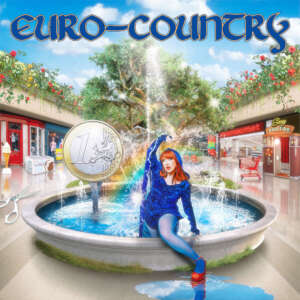
One way to deal with trolls is to ignore them; another is to pen a clapback track so brilliant, it spawns a viral TikTok trend and becomes the de facto song of the summer. Since its release, ‘EURO-COUNTRY’ single ‘Take A Sexy Picture Of Me’ has taken on a life of its own, its pouting, winking pop delivering an eviscerating comment on society’s fucked-up, capitalistic conflation of attractiveness and youth. Live, CMAT delivers this sniper shot with panto-like camp: we boo and hiss at the mention of basement keyboard warriors, and cheer as she gives a defiant booty shake.
Fun as it all is, the song does, she explains, speak to a very real, very concerning social precedent. “There’s something seriously, seriously wrong in the culture right now. They want you to act and dress and behave like a teenager if you’re going to be a woman that makes music, and the minute that you don’t do that, you really annoy a certain demographic through existing.” She points to instances of certain industry folk “getting angry at me for putting my foot down”: “[people] say: ‘oh we love CMAT, she’s so different!’. And then I do something different, and they’re like: ‘what?!’.”
Just look at Lily Allen - a forty-year-old woman who, if ‘West End Girl’ is anything to go by, was put down by her own husband for - *checks notes* - accepting a job and building her career. We digress: “The thing about men… is they’re stupid,” proclaims Ciara. “The thing about men is that they haven’t been socialised to be as emotionally intelligent as women because it’s not a safety issue for them; they don’t need to be. So then when they find themselves in their mid-30s or mid-40s like your man [David Harbour] and they’re faced with something that makes them feel not good about themselves, they have absolutely no idea how to react to that.”
It’s a ridiculous social Catch-22 whereby adult women are patronised, and actual teenagers “want to dress like [they] have a mortgage and two children waiting at home”. Ciara laughs: “I did it! We all did it; I was looking like a sex worker to try and get into the indie gig, and somehow it worked. But now, I get comments all the time from people saying ‘oh my God, I just googled her and she’s 29 - she looks 45, what’s going on?’ And it’s because I dress like a 29-year-old woman rather than an 18 year old.” She shrugs. “I’m just going to continue to act like myself, which is a woman who’s about to turn 30. But also, I don’t think I’m old - I think I’m 30! And I’m really looking forward to it.”

Far from being a limitation, we’d argue that Ciara’s age is in fact a key part of why CMAT speaks to so many, so strongly. ‘EURO-COUNTRY’ is peppered with (pop) culture references - to Kerry Katona, Coronation Street, Jamie Oliver, and the Kyrie Eleison prayer - which ground the record in a very particular time and place (specifically, Ireland in the wake of the 2008 recession). In the visualiser for ‘When A Good Man Cries’, she dons a Daniel O’Donnell mini-dress; for the title track’s video, she’s splashing around in Dublin’s Omni shopping centre fountain. Essentially, those who get it, get it. And against the backdrop of 2025’s political and social shitshow, there’s something both endearing and steadying about these familiar touchstones - like she’s telling a joke that we’re in on, or regaling an anecdote we were present for.
“I love when an artist can remind you of something that only a certain time will remember,” says Ciara. “Bailey J Mills is a drag queen from Manchester who really inspires me. She does an impression of [author] Jacqueline Wilson, and it doesn’t look like her, or sound like her. But she’s wearing a million rings and bangles, and the impression is just her doing this,” she mimes scribbling manically, “and being really loud while signing an autograph. That’s not an accurate impression of Jacqueline Wilson, but it speaks to the impression that any child who vociferously read her books would have of her, because we’d look at the picture of her in the back and think: ‘Jesus, she’s wearing loads of rings and bangles’. It’s stuff like that I find to be so unbelievably intoxicating and special. And I try to do a bit of that in my work.”
It’s these latent memories and unremarkable observations that Ciara has a real knack for; these which give her lyrics that little more poignance, and which make those listening feel really, truly seen. (“Cheap Cabernet kissing your teeth like a bad lip stain / Like the freebie shit inside teen girl magazines,” starts ‘Iceberg’). In her eyes, it’s less a case of straightforward, ‘I wish I was young again’ nostalgia, and more symptomatic of a widespread yearning for community within culture - something which tech-led individualism has broadly swept away. “Think of how different everything is now compared to ten years ago: how you interact with and stay in contact with your group of friends; or how [back then] there were all these really streamlined forms of media. When The X Factor was on, everybody in Ireland and the entire United Kingdom was watching the same programme,” she recalls fondly. “I remember Harry Styles’ audition: I came into school on Monday and four different girls had a grainy screen grab of him as their wallpaper on their phone. I was there at Ground Zero, do you know what I mean? God, I loved the X Factor.”
Ciara has lived in London for years; before that, she had a brief stint in Manchester, where she moved from Ireland with her then-boyfriend. Having a looser, less geography-centric sense of community, then, has long been on the agenda. “I hate to say it, but I definitely feel like I have more community in Hackney than I did in Dublin,” she admits. “When I lived in Dublin, I couldn’t afford to live in the city centre; everybody I knew had to live like 20 or 30 minutes drive away in order to be able to afford it. I find it a lot easier here.
“But,” she continues, “I miss Ireland. I miss it every day. That’s why I think the London Irish brigade - should we call it anything else - are so unionised. The London Irish community is fervent in its desire to all get together and have Irish language clubs; Annie Mac does an Irish literature evening, and there’s a real call to action. But it’s sad, because it’s basically this generation of Irish people that have turned around to the Irish government and said: ‘you fucked it up, none of us can live here, so we’re going to make Ireland 2.0 in East London’.”
For centuries, Ireland has been defined by mass emigration, particularly of its young people. Does Ciara feel any personal guilt about leaving? “100%,” she says immediately. “It’s really difficult to be away from Ireland and then watch the political situation from afar, with the rise of the far right. There was a real touch and go [moment] as to whether [left wing politician] Catherine Connolly was going to get in for the presidency, and the voter turnout was really, really low. And these are problems which are all caused by such a high percentage of the younger generation not being in the country anymore.
“You’re always going to have the guilt of leaving them behind, and of my entire family still being there. And the longer away I live from it, the harder it is to go back, because the less it looks like home. That is the emigrant’s age-old problem. I love Ireland and I love my family, but every time I go back I feel a little less comfortable.”

Where her Irish identity has - obviously - always been part of CMAT’s work, ‘EURO-COUNTRY’ places it front and centre, unpicking the complex layers of pride, frustration, and regret that surround her relationship with her homeland. It’s far from a love letter to the country; instead, she rails against the government’s handling of the Celtic Tiger financial crash, which decimated communities and ripped apart families. (“I was twelve when the das started killing themselves all around me”, goes the title track’s haunting bridge).
“On the record, I was really grappling with my Irishness, and I said some things that Irish people didn’t like. I had a lot to say, specifically, about political stuff; and a lot of people said: ‘why are you talking about that if you’re not there?’ That’s kind of valid,” she nods. Elsewhere, she notes the disconnect between the “lack of identity” that pervades her generation, and the fetishised caricature of Irishness that exists in the popular imagination.
America, Ciara reckons, has a lot to answer for. “The oversimplification [of Irish identity] comes along with commercialisation, which inherently comes along with everything America touches. I basically just disagree with any national identity politics that is for commercial value, and that can be bought and sold, because humans are too complicated. You can’t say - in the way that American culture is kind of doing at the moment - ‘Ireland is my favourite country in Europe, because they’re really funny, and they’re always up for a night out!’. Humans that come from one country are the same as humans that come from any other country. There’s an inherent problem in saying that anything is better than anything else; especially national identity, especially at the moment, when everyone’s being so fucking xenophobic.”
Weirder still is the knowledge that her national identity can entirely subsume her personal. “Sometimes, all people see you as is Irish, because you represent something,” she says. “I’m guilty of it as well. Cillian Murphy: I fucking cried when that bitch won the Oscar. I don’t know anything about him! [But] I thought ‘a guy from Cork has won the Oscar, that’s amazing’. We’re all guilty of it, because it means so much to us.”
Though ‘EURO-COUNTRY’ goes some way to sounding out her identities - national, personal, artistic, the lot - Ciara makes no claims to have all the answers just yet. “Sometimes I’m fucking clumsy with the shit I say, definitely, but the larger point I guess I’m trying to make is that I miss home, but it doesn’t exist anymore.”
The place she remembers has changed, and so has she. “I became CMAT, and now there’s a mural of me on the side of the wall in my village as you go in. That’s so amazing, and when I’m there I feel amazing, but it’s not sustainable for me to be there either, because it’s too intense.” The solution, it seems, is to keep looking forward; to take all the lessons from this breakout year - Mercury robbery and all - and keep blazing her EU-blue trail as a one-of-a-kind pop star. She looks down and laughs, realising she’s been too busy talking to have even touched her pint yet. “It’s hard to be a national treasure…?”
‘EURO-COUNTRY’ is out now via AWAL.
CMAT will play next year’s LIDO Festival on 12th June 2026, where DIY is a media partner. Head here to get tickets now.
Stylist: Katie-Ruby McLaughlin Robinson
Make-up: Niall Candy
Hair: Jessie Whelan
Records, etc at


CMAT - If My Wife New Id Be Dead

CMAT - Diet Baby - RSD 2026

CMAT - Crazymad, For Me

CMAT - Euro-Country
As featured in the November 2025 issue of DIY, out now.
More like this

Sam Fender, CMAT, ROSALÍA and more win at The Ivors 2026
The annual award ceremony honours exceptional achievements in songwriting.
22nd May 2026

LIDO Festival forced to cancel CMAT & Bombay Bicycle Club shows, while rescheduling Maribou State headliner
The Victoria Park event will no longer take place this June in order “to protect park ground conditions”.
10th April 2026

Ivor Novello Awards announce 2026 nominations
CMAT, Olivia Dean, Lily Allen, Wolf Alice, and Jim Legxacy have all received nods in the coveted Best Album category.
25th March 2026

CMAT confirms truce with Jamie Oliver in new video for ‘The Jamie Oliver Petrol Station’
It’s the crossover we’ve all been waiting for…
12th March 2026

Featuring Yard Act, Death Cab For Cutie, Graham Coxon, Maisie Peters and more.